
We look after trees
Our woodland work
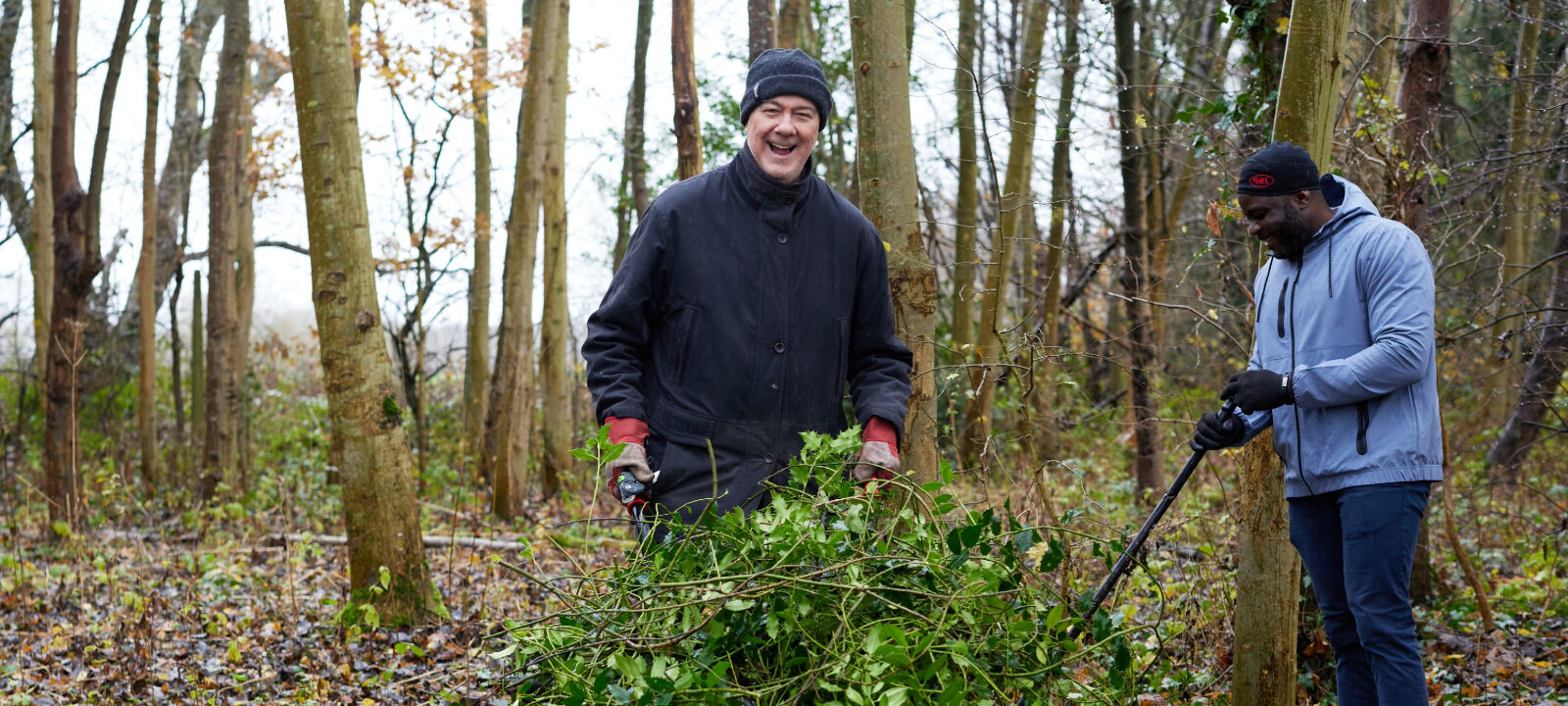
Woodland management makes up a big part of what we do. We work at sites across the region to enhance our green spaces, managing the existing woodland landscape to help it to thrive. From nature-based solutions like leaky dams to slow water flow in high rainfall events, to the removal of invasive species and making our woodlands more accessible through improved pathways and signage, we look after many aspects of woodland management.
Our urban woodlands are invaluable spaces for biodiversity, the resilience of urban areas and improved wellbeing. We know that people in our urban spaces are happier with greater access to nature. Urban nature recovery thrives when communities are actively engaged. That’s why we choose to protect them.
Projects
Trafford Countryside Nature Partnership
Spotlight on…
Species Survival Fund
Over the last 18 months, we have worked with Groundwork Greater Manchester, TCV, Canal & River Trust, and Mersey Rivers Trust, and, in partnership with Manchester City Council, Oldham Council, and Tameside Council, to restore areas of the Medlock Valley, with the aim of bringing nature back into the landscape.
Supported by the Species Survival Fund, the main goal of this project was to create and restore habitats and help reverse the decline of important species like bats, water voles, willow tits, great crested newts and waxcap fungi along the River Medlock. The partnership set a big target: managing 30 hectares of land across seven key sites.
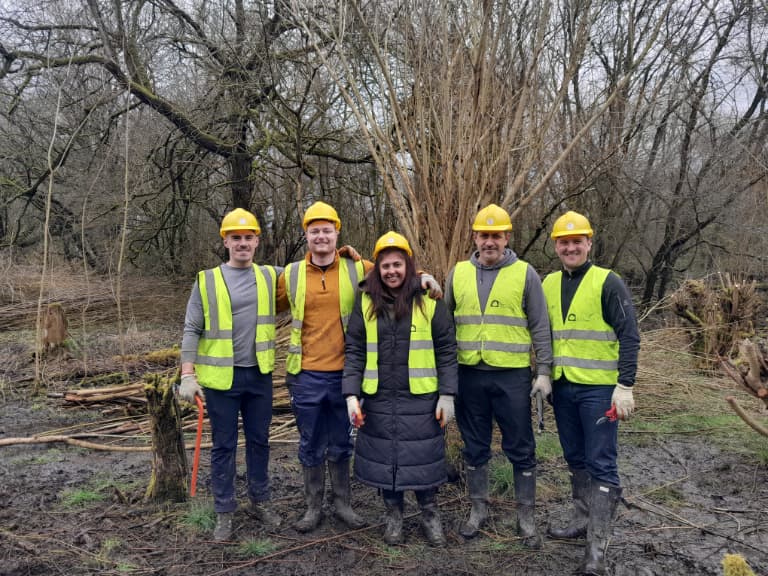
At City of Trees, we worked at five main locations: Clayton Vale, Bank Bridge Meadow, Sunnybank Vale, Mill Stream Open Space and Lees Brook Nature Park. Volunteers helped with hands-on tasks like planting trees, sowing wildflowers, and removing invasive or dominant plants. We also partnered with local contractors to do special tree veteranisation work, creating habitats that would normally take decades to form.
Because this is a large-scale project, there were many chances for people to join us. This helped us build a strong group of volunteers.
A total of 387 volunteers gave almost 2,000 hours of their time to City of Trees.
Thanks to their dedication, we were able to make real changes:
- 1,945 native trees planted (more than 24 species)
- 722 woodland specialist wildflowers planted (more than 22 species!)
- Over 300g of wildflower seeds sown
- Almost 2.2 hectares of woodland managed
- More than 90 bags of litter removed